Sylvivorous Trees at the Scout Tract
Learning about nature at the sufferance of my son in the York Regional Forest.
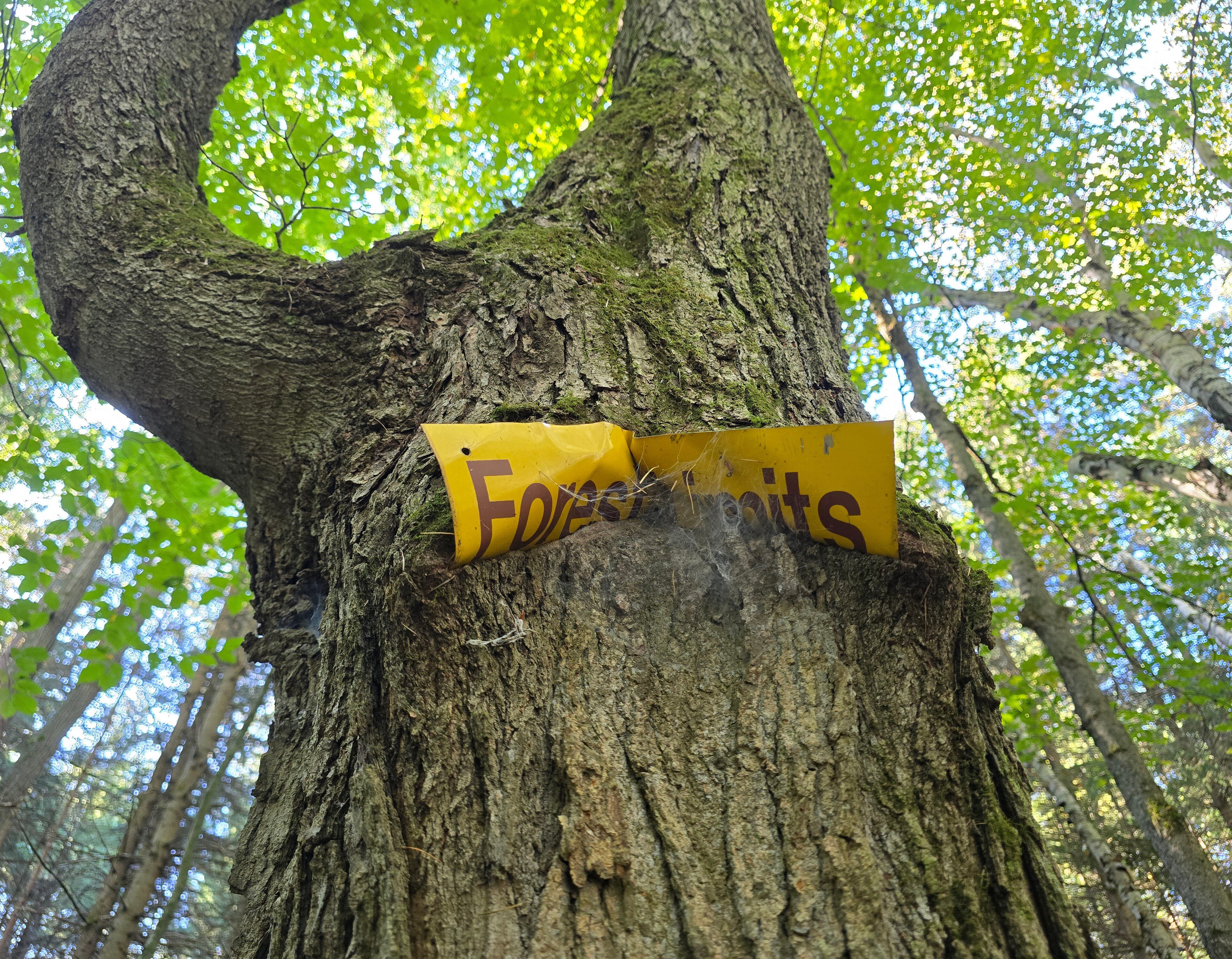
My favourite Forest Limits sign at the Hollidge Tract. When my mother took me and my sister here as children, we regularly had a good laugh at this sign. Rediscovering it with my wife decades later was a joyful lesson in trees’ capacity for relentless, patient irony.
Dividends
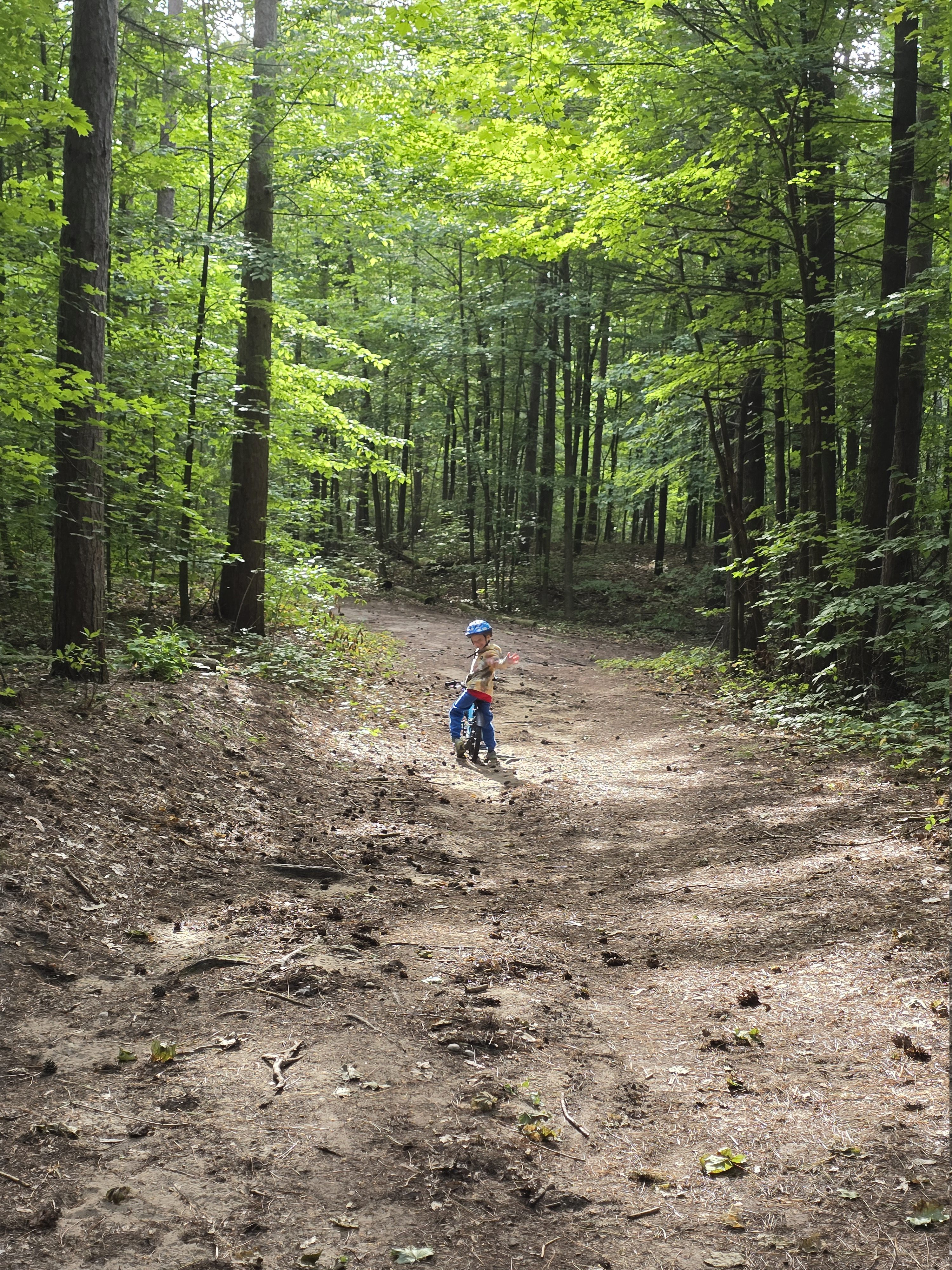
Taran and I were at the Scout Tract a couple of days ago, checking to see if there were still mosquitoes (four enthusiastic and intermittently swollen thumbs up; would be exsanguinated again1). We accidentally had a beautiful walk, though, and I’m living my best life when my son spots cool things and then urges me to take pictures so we can learn about them later. I wanted to share a few of our treasures.
Poison Ivy Berries
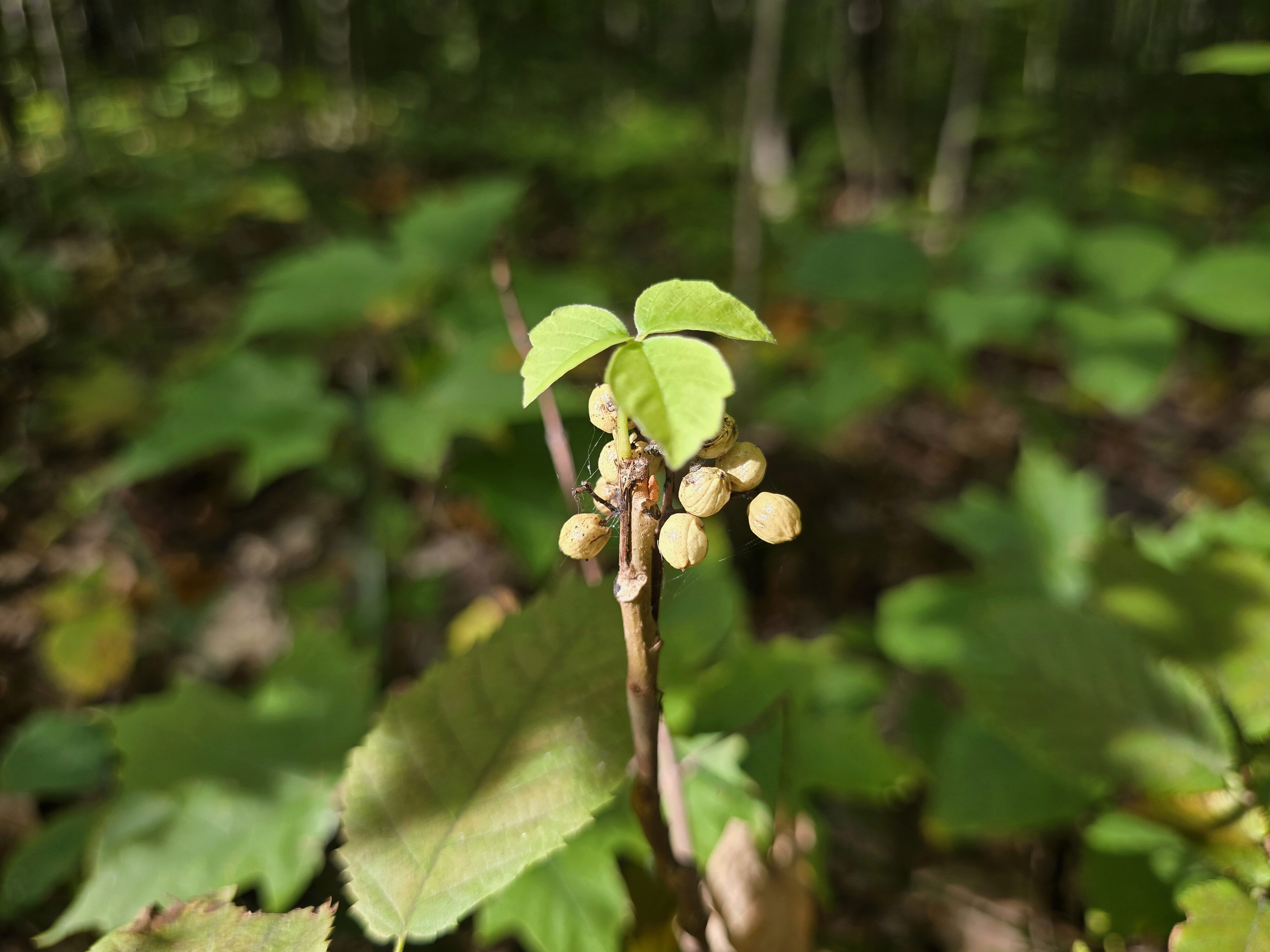
I had my second (intentional) encounter with poison ivy berries. The Scout Tract has as much poison ivy cover as any of the usual hikes for me and my family: the main trail is clear as long as you stay in the centre and prance over the occasional horse droppings, but the edges of the path are carpeted and the side-trails are often choked. What I didn’t know until a couple of years ago is that poison ivy propagates with berries2. Don’t eat them, don’t make jam, don’t stomp them barefoot by the barrelful for exquisite itchy wine, and if you need to make lacquerware or decorate the heck out of a fountain pen, please do it with expert supervision. &c.
Hickory Tussock Moth Caterpillar
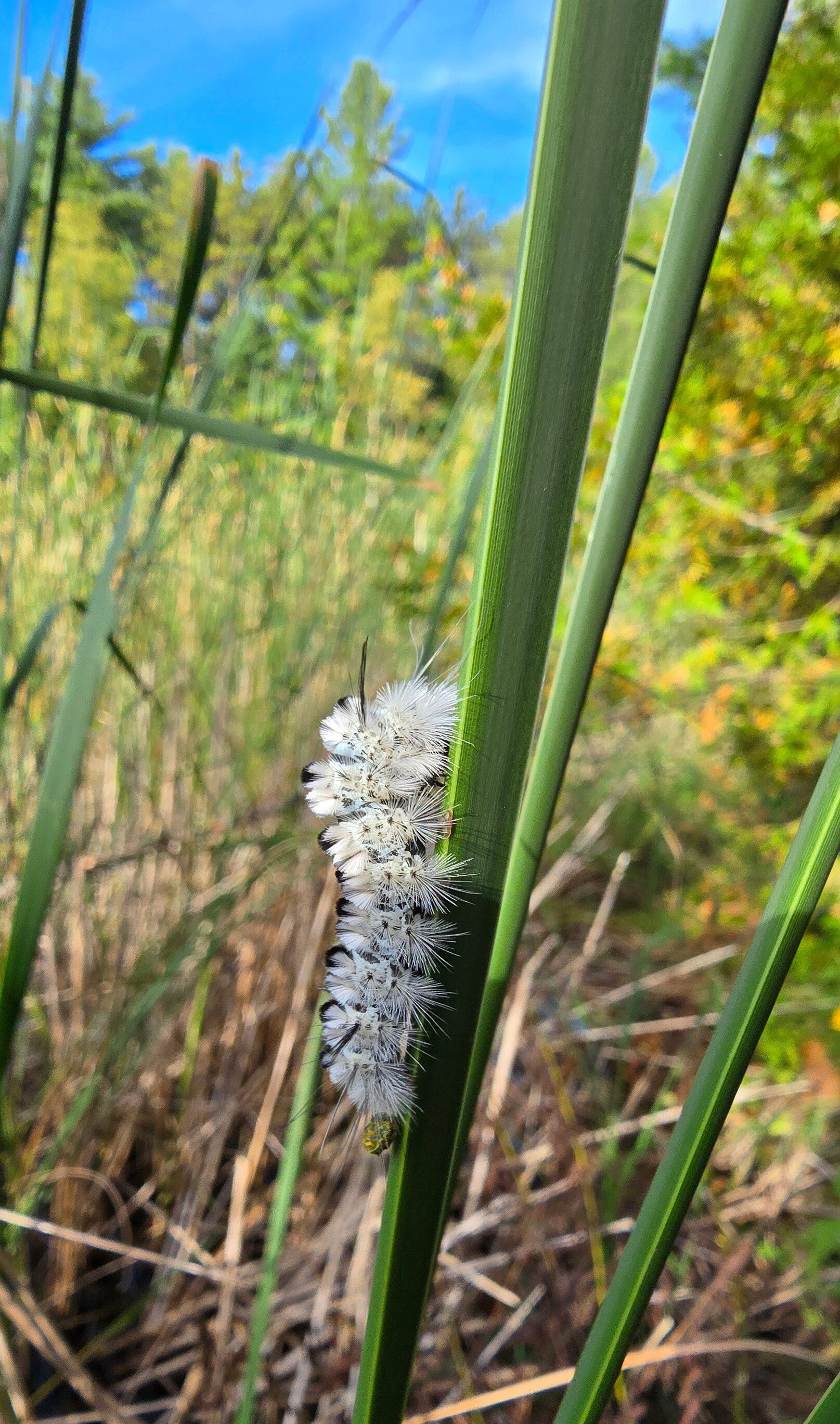
The end of the main path loops around a small pond currently full of ploofing bulrushes3. Taran had ridden ahead, but I found this hickory tussock moth caterpillar climbing one of the stalks and called him back to annoy him with a repetition of my advice not to touch these things if he finds them (he knowwwwwws). When I was a kid, I picked up caterpillars all the time and never had any grief, but these little things can apparently cause irritation. Like an overly protective father. It’s rough.
Gemel Trees
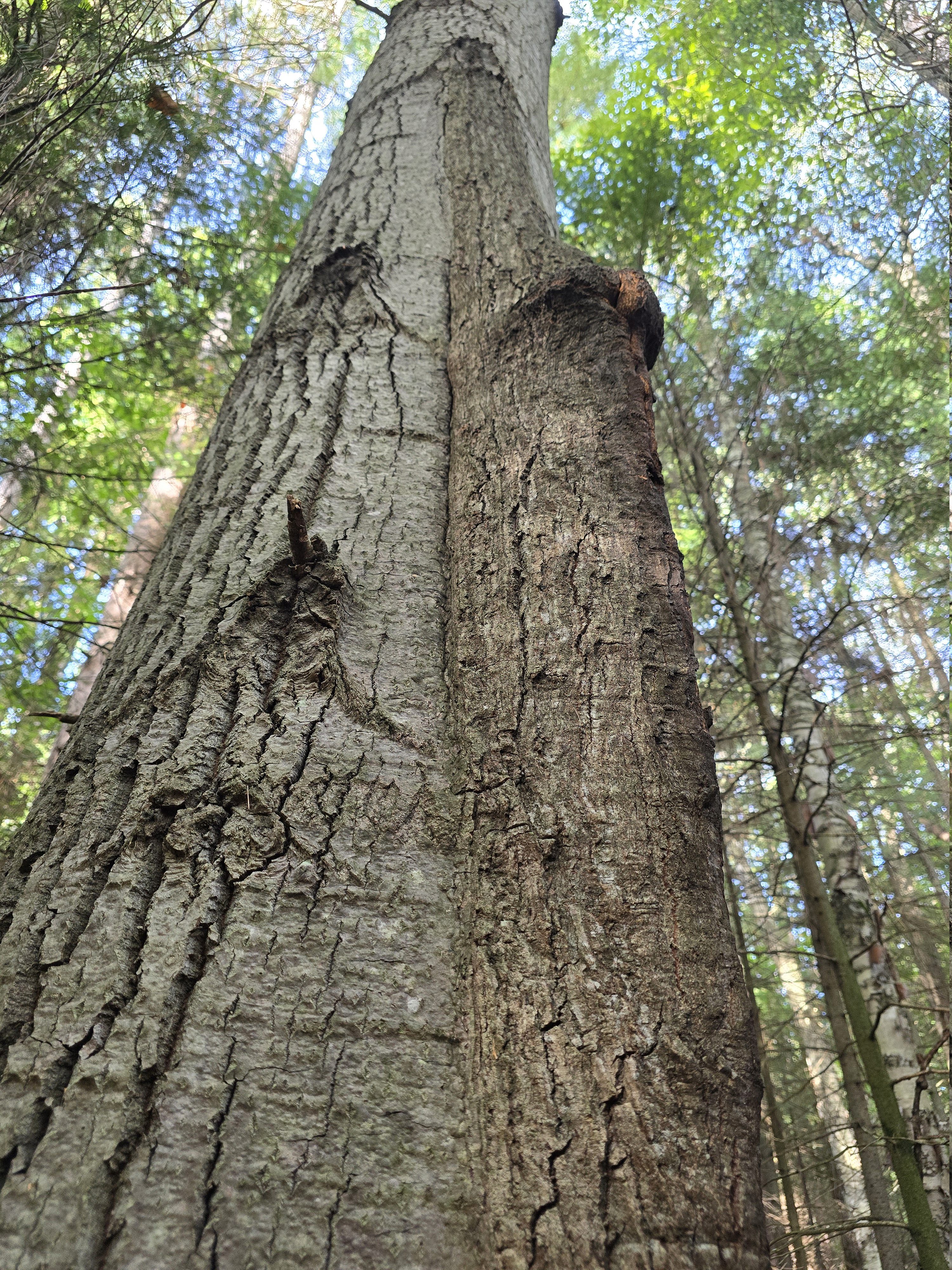
As we completed the pond-loop, we spotted two trees grown together, which I have never seen before, and thought was awfully neat. As green space in Toronto succumbs to developer greed, I find it vicariously satisfying to anthropomorphize the inverse when I see it. I believe the trees merging together here are an example of inosculation, and are sometimes called a “gemel” in this configuration. The next time I pass by, I’ll try to figure out what species the individual trees are if I’m able, like a responsibly curious person.
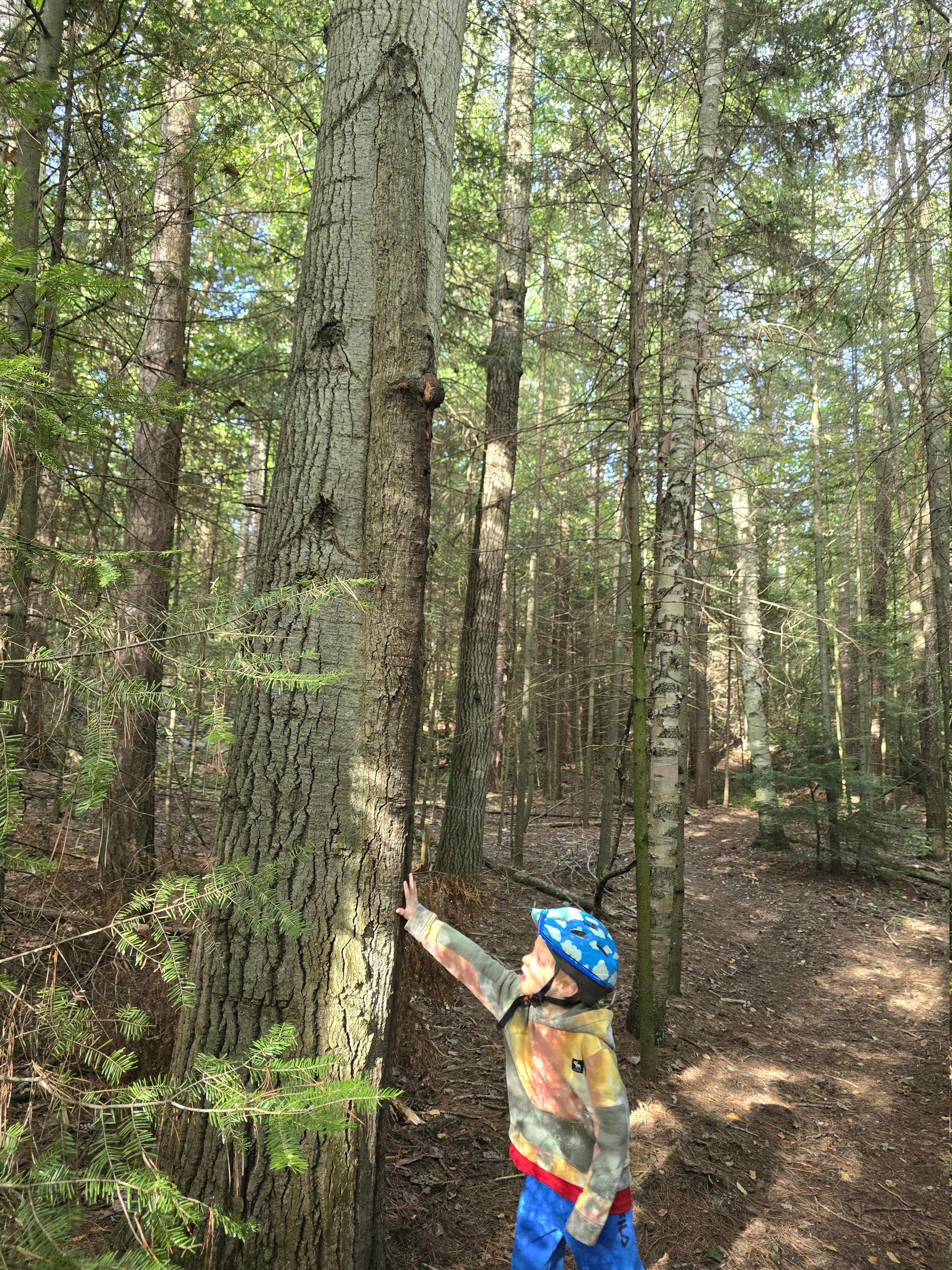
Go on, then!
I can’t recommend the York Regional Forest enough if you’re able to get there, especially as the leaves start to turn and the mosquitoes need feeding.
Kiosks at the entrances of some of the tracts have little weatherproof cubbies with a complete guide to the various tracts. It’s a fun grab and can be aspirational. The PDF version is available here.
I’ve been reading Michael Runtz’ The Howls of August which describes his early work photographing wolves in Algonquin Park. In his talks, he often declares bug bites and stings to be the (worthy) admission to nature’s spectacle and wonder, and in the book he talks about needing to wait hours at the edge of a wolf rendezvous site in absolute stillness for a chance to capture a picture without scaring away the pack. … So, regarding mosquitoes, I have nothing to complain about and much to aspire toward. ↩︎
Rather than via the phlegmy expectorations of will-o-the-wisps, as many of us understandably assume. ↩︎
Or cattails, or water hotdogs, or reedmaces! Reedmaces! That’s much better, I think. Alternative armaments for verdant chivalry. ↩︎